Wednesday, 21 September 2011

Main article: Suzuki Cultus

Main article: Suzuki Cultus
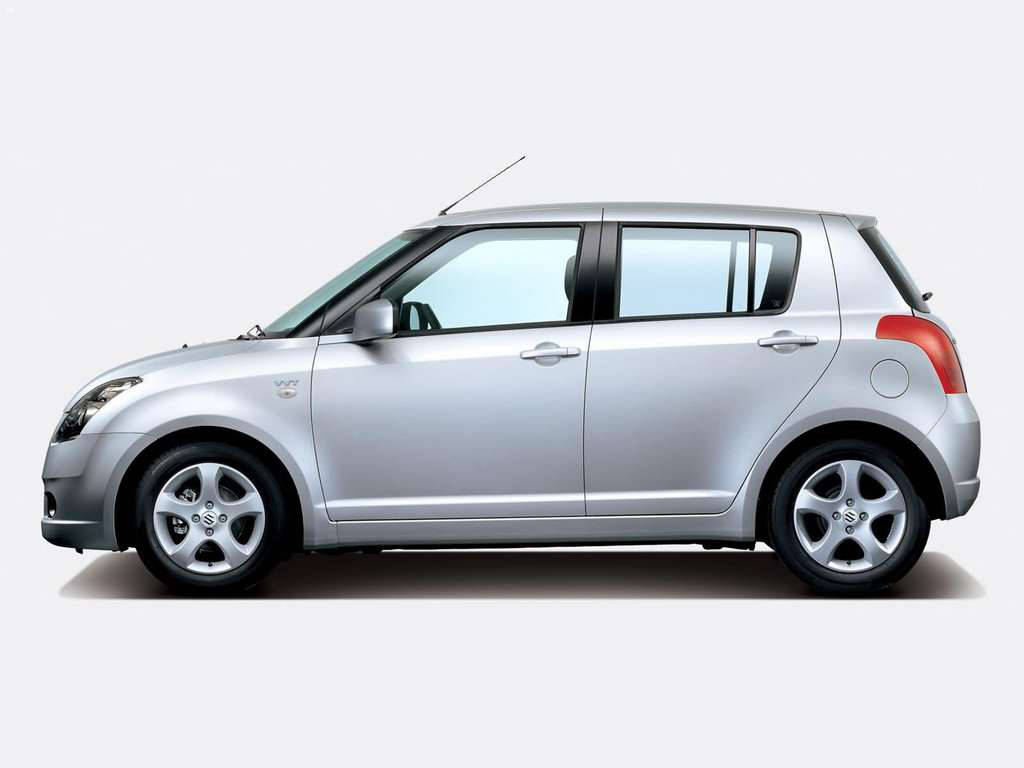
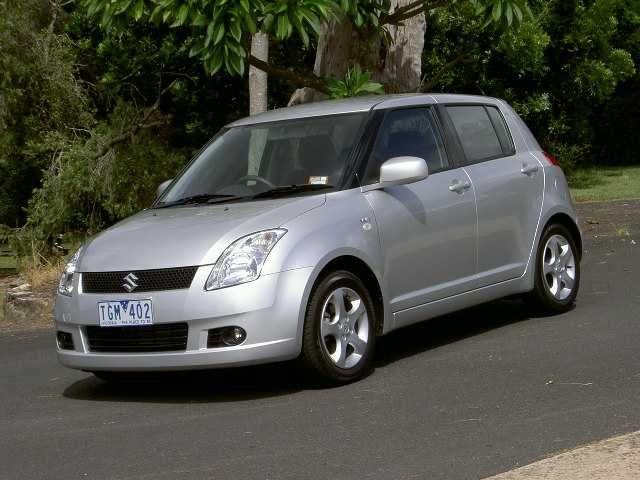
The Suzuki Swift began as a marketing and manufacturing rebadge of the Suzuki Cultus a supermini (or subcompact) manufactured and marketed worldwide across three generations and four body configurations—three-door hatchback, four-door sedan, five-door hatchback and two-door convertible—and using the Suzuki G engine family.
The Swift was marketed in the Japanese domestic market (JDM) as the Cultus and elsewhere as the Suzuki Forsa, Suzuki Jazz, Chevrolet Swift, Chevrolet Sprint and Sprint Metro, Geo and Chevrolet Metro, Pontiac Firefly, Maruti 1000, Holden Barina and Subaru Justy. Versions of the second generation Cultus were also produced until 2007 in India and the car remains in production today in Pakistan.

suzuki swift
suzuki swift
suzuki swift
suzuki swift
suzuki swift
suzuki swift
suzuki swift
suzuki swift
suzuki swift

Passo is a subcompact car

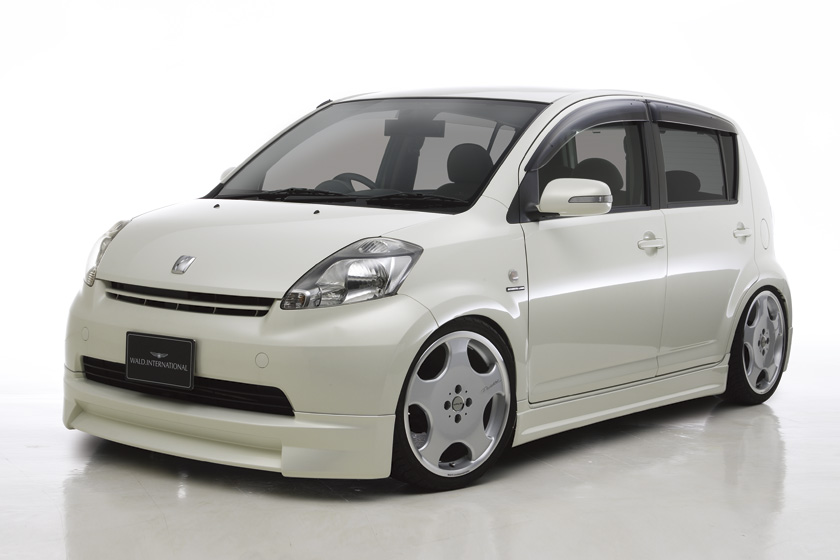
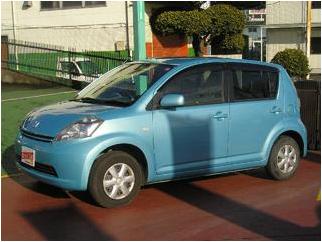
The Toyota Passo is a subcompact car by Japanese automaker Toyota, and is sold only in Japan. The small but roomy Toyota is available with a 1000cc engine in 2WD and 4WD, or a 1300cc engine with only 2WD. Transmission wise it only comes with a CVT Automatic box. The Passo is only available in Petrol and according to the Japanese Law, the car can carry 5 passengers (including driver).
The Passo comes in a range of 10 colours.
Banna Shake Metallic Black Mica Metallic Bright Silver Metallic Champagne Metallic Copal Maroon Brown Mica Mint Blue Metallic Copal Pearl White White Yellow Green Mica Metallic Shining Red.
The Toyota Passo shares bodies (minus indevidual details) with the Daihatsu Sirion, Daihatsu Boon, Perodua MyVi and the Subaru Justy

passo car
passo car
passo car
passo car
passo car
passo car
passo car
passo car

Volvo means "I roll" in Latin

Volvo means "I roll" in Latin, conjugated from "volvere", in relation to ball bearing. The name Volvo was originally registered in May 1911 as a separate company within SKF AB and as a registered trademark with the intention to be used for a special series of ball bearing, but this idea was only used for a short period of time and SKF decided to use "SKF" as the trademark for all its bearing products.
In 1924, Assar Gabrielsson, a SKF Sales Manager, and Engineer Gustav Larson, the two founders, decided to start construction of a Swedish car. Their vision was to build cars that could withstand the rigors of Sweden's rough roads and cold temperatures. This has become a feature of Volvo products ever since.
The company AB Volvo had no activities until 10 August 1926, after one year of preparations involving the production of ten prototypes, was set up to carry out the car-manufacturing business within the SKF group. AB Volvo was introduced at the Stockholm stock exchange in 1935 and SKF then decided to sell its shares in the company. Volvo was delisted from NASDAQ in June 2007, but remains listed on the Stockholm exchange.
In 1999, Volvo sold its car division Volvo Cars to Ford Motor Company for $6.45 billion. The Volvo trademark was shared between Volvo AB, where it is used on heavy vehicles, and the unit of Ford, where it was used on cars. Volvo stopped posting profits in 2005 and in 2008, Ford decided to sell its interest in Volvo Cars; in August 2010, Ford completed its sale of Volvo to the parent of Chinese motor manufacturer Geely Automobile for $1.8 billion.


volvo
volvo
volvo
volvo
volvo
volvo

Friday, 2 September 2011

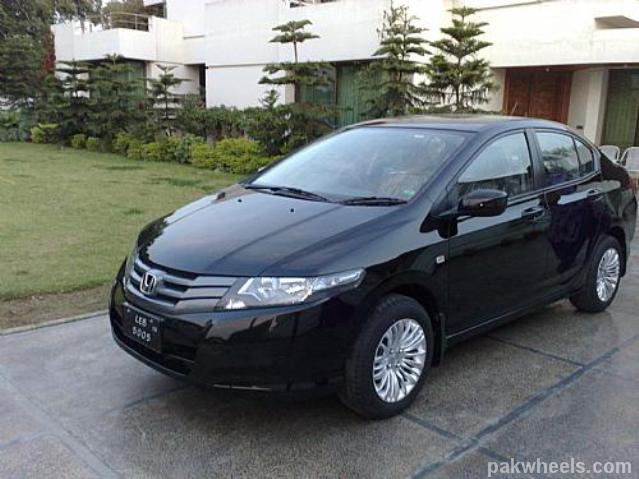
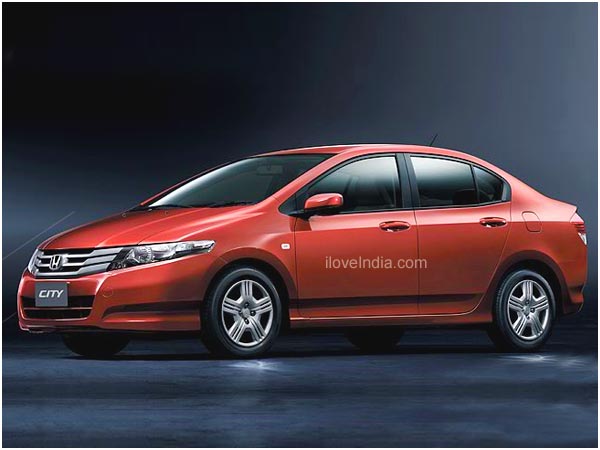
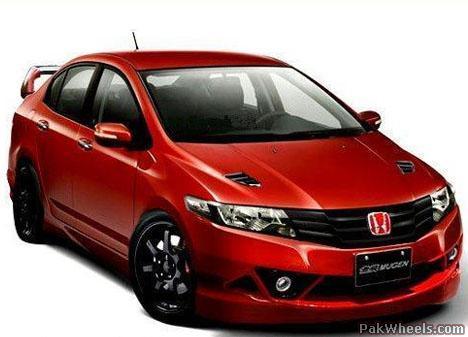
honda city european and Australasian markets,

The Honda City is a subcompact car manufactured by the Japanese manufacturer Honda since 1981. Originally made for the Japanese, European and Australasian markets, the City was retired without replacement in 1994. The nameplate was then revived for use on a series of compact four door sedans particularly aimed at developing markets, mainly sold in Asia outside of Japan but lately also in Latin America and Australia.
From 2002 to 2008, the City was sold as the Honda Fit Aria in Japan domestic market. It is a subcompact sedan built on Honda's Global Small Car platform, which it shares with the Fit/Jazz (a five-door hatchback), the Airwave/Partner (a wagon/panel van version of the Fit Aria/City), the Mobilio, and the Mobilio Spike—all of which share the location of the fuel tank under the front seats rather than rear seats. By mid-2009, cumulative sales of the City has exceeded 1.2 million units in over 45 countries around the world since the nameplate was revived in 1996.
In 2011, the City is sold as Honda Ballade in South Africa.
Contents
* 1 First generation (1981–1986)
* 2 Second generation (1986–1994)
* 3 Third generation (1996–2002)
* 4 Fourth generation (2002–2008)
* 5 Fifth generation (2008–present)
* 6 Advertising
* 7 References
* 8 External links
First generation (1981–1986)
City AA/FV/FA Honda City (AA)
Body style 2-door convertible
3-door hatchback/van
Layout Front-engine, front-wheel drive
Engine 1,231 cc ER I4
Transmission 4-speed manual
5-speed manual
4+3-speed Hypershift manual
3 speed Hondamatic automatic
Main article: Honda City (AA)
The first Honda City (AA for sedans, VF for vans and FA for the wider Turbo II and Cabriolets) was introduced in November 1981 with the innovative "Tallboy" design; of unusual height it enabled four adults to fit comfortably in the very short City (under 3.4 m/11.2 ft). Produced as a 3-door hatchback in a variety of trim levels, the City was also available together with the Motocompo, a special 50cc 'foldaway' scooter designed to fit in the City's small luggage area.
honda city
honda city
honda city
honda city
honda city

honda crx wheel-drive sports

The Honda CR-X, originally launched as the Honda Ballade Sports CR-X in Japan, was a front-wheel-drive sports compact car manufactured by Honda. The first generation CR-X was sold in some regions outside Japan as the Honda Civic CR-X.
In the US-spec, the CR-X was marketed as an economy sport hatchback, having room for just two passengers. EU-spec, however, received a ZC 130 hp (97 kW) engine and 2+2 seats. Redesigned in 1988 and produced to 1991, the CR-X was popular for its performance, nimble handling, and good fuel economy. In the US its performance model, the Si (with the SOHC (D16A6) not the equally-sized JDM Si 1590cc (ZC) DOHC engine), was a favorite. Honda's 1992 CRX del Sol was marketed as a CR-X in some markets.
The original 1.3 liter car (chassis code AE532) and the later 1.5 liter American-market CR-X HF (High Fuel economy) model (chassis codes EC1 and AF) could reliably achieve very good gas mileage, more than a decade before gas-electric hybrids appeared on the market, and at no price premium over the base model; the 1.5 liter is rated by the U.S. Environmental Protection Agency‎ (EPA) (under the new rating system) at 41 miles per U.S. gallon (5.7 l/100 km; 49 mpg-imp) city and 50 miles per U.S. gallon (4.7 l/100 km; 60 mpg-imp) highway.[1] The Japanese Si and European 1.6i-16 models came with a 1590 cc DOHC engine putting out 135 bhp (101 kW; 137 PS) in the UK-spec model and 140 bhp (104 kW; 142 PS) in the JDM model. Though similar versions of the same engine, the Japanese Si engine was stamped ZC, whilst the European engine was stamped D16A9.
The chassis was significantly changed in 1987 from its original torsion bar front and semi-independent rear, to fully independent wishbones all around in line with its sister Civic/Ballade models. Outside of North America, this generation 2 CR-X was available with a 1495 cc sohc or an updated version of the 1590 cc DOHC ZC engine. Many of these were fitted with fuel injection as standard.
In September 1989 Honda also added the 1595 cc B16A VTEC engine to the lineup outside of America. The VTEC engine used Variable Valve Timing to provide increased power in the high rev range, while still allowing low fuel consumption and better idling at low RPMs. The B16A produced 150 bhp (112 kW; 152 PS) in the European 1.6i-VT model (where the engine bore the designation B16A1) and 157 bhp (117 kW; 159 PS) in the JDM SiR model. The CR-X was the second car to receive a VTEC engine, shortly after the Integra, although the CR-X was more popular and common.
honda crx
honda crx
honda crx
honda crx
honda crx

Honda Fit is a five-door hatchback

The Honda Fit is a five-door hatchback subcompact car manufactured by the Honda Motor Company of Japan, first introduced in June 2001 and is now in its second generation. The Fit shares Honda's Global Small Car Platform with the City/Fit Aria, Airwave/Partner, Mobilio, Mobilio Spike, Freed and Freed Spike.
In both its generations and all its global iterations, the Fit is known for its interior packaging, which places the fuel tank under the front seat, enabling rear seats that fold to a flat, low position – thereby enabling a flexible, regularized cargo volume.
The nameplate Jazz is used in Europe, some parts of Asia, Australia, Oceania, the Middle East, and Africa — while the name "Fit" is used in Japan, China, and the Americas. Fit/Jazz is sold in approximately 115 countries and produced at ten plants in eight countries/regions.Worldwide cumulative sales of Fit/Jazz has reached 3.5 million by July 2010.
Contents
* 1 First generation
o 1.1 Models
o 1.2 Drivetrain and platform
o 1.3 Seating and cargo
o 1.4 Production
o 1.5 Regions
o 1.6 Crash test
* 2 Second-generation
o 2.1 Fit Hybrid (2010)
o 2.2 Fit Shuttle (2011)
o 2.3 Regional information
* 3 Sales
* 4 Marketing
o 4.1 Recall
* 5 2nd Recall
* 6 3rd Recall
* 7 Fit EV concept
* 8 Awards and recognition
* 9 See also
* 10 References
* 11 External links
First generation
First-generation Fit 2001 Honda Fit (JDM)
Also called Honda Jazz
Guangzhou-Honda Fit Sport
Production 2001–2007
2006-2008 (U.S. and Canada)
Assembly Sumaré, São Paulo, Brazil
Guangzhou, China
Karawang, Indonesia
Suzuka, Mie, Japan
Santa Rosa, Philippines
Ayutthaya, Thailand
Predecessor Honda Logo
Class North America: Subcompact
Europe: Supermini
Body style 5-door hatchback
Layout Front engine, front-wheel drive / four-wheel drive
Platform Global Small Car; GD1/2/3/4
Engine L12A i-DSI 1.2 L I4
L13A i-DSI 1.3 L I4
L15A i-DSI 1.5 L I4
L15A VTEC 1.5 L I4
Transmission 5-speed manual
5-speed automatic
CVT / CVT-7
Wheelbase 2,450 mm (96.5 in)
Length 3,845 mm (151.4 in)
157.4 in (4,000 mm) (U.S. & Canada)
Width 1,675 mm (65.9 in)
Height 1,525 mm (60.0 in)
Curb weight 1,084 kg (2,390 lb) for 1.4 L LS with manual transmission
Related Honda Airwave
Honda City
The Honda Fit debuted in June 2001 in Japan and immediately became a big hit. By December 2001, it had outsold the Toyota Corolla, and ranked first in sales for nine out of twelve months in 2002. It subsequently was introduced in Europe (early 2002), Australia (late 2002), South America (early 2003), South Africa and South-East Asia (2003), China (Sep 2004), and Mexico (late 2005).
A production model for the United States and Canada debuted on January 8, 2006 at the North American International Auto Show in Detroit. The car was released in Canada on April 3, 2006, and in the U.S. on April 20, 2006 as a 2007 model year car. In the North American markets, the first generation Fit was replaced after only two model years by a new 2009 model, which was released for Japan in November 2007 as a 2008 model. Subsequent iterations will maintain the same platforms worldwide.
Honda originally intended to name the car "Fitta", but shortened the name in some markets, and renamed it completely in others, upon discovering that in several Nordic languages, fitta is a popular and very vulgar slang word for vulva.
honda fit
honda fit
honda fit
honda fit
honda fit
honda fit
honda fit
honda fit
honda fit

Thursday, 1 September 2011

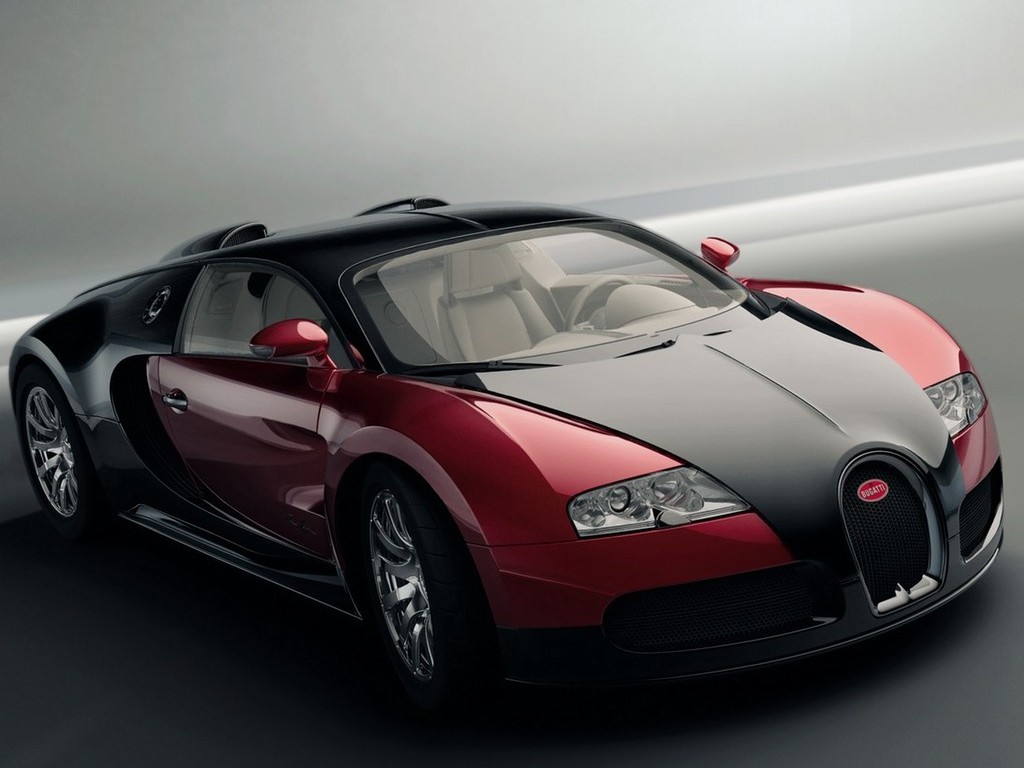
bugatti veyron mid-engined grand touring car

The Bugatti Veyron EB 16.4 is a mid-engined grand touring car. The Super Sport version is the fastest road-legal car in the world, with a top speed of 431.07 km/h (267.85 mph). The original version has a top speed of 408.00 km/h (253.52 mph).It was named Car of the Decade (2000–2009) by the BBC television programme Top Gear.
Designed and developed by the German Volkswagen Group and produced by Bugatti Automobiles SAS at their headquarters in Château Saint Jean in Molsheim (Alsace, France), the Veyron's chief designer was Hartmut Warkuss, and the exterior was designed by Jozef Kabaň of Volkswagen, with much of the engineering work being conducted under the guidance of former Peterbilt engineer and now Bugatti Engineering chief Wolfgang Schreiber.
A number of special variants have been produced, including two targa tops. In December 2010, Bugatti began offering prospective buyers the ability to customize exterior and interiors colours by using the Veyron 16.4 Configurator application on the marque's official website.
Contents
* 1 Name origin
* 2 Specifications and performance
o 2.1 Engine output
o 2.2 Super Sport edition
o 2.3 Top speed
o 2.4 Braking
o 2.5 Specifications and statistics
* 3 Sales
* 4 Special versions
* 5 Criticisms and comments
o 5.1 Reviews
+ 5.1.1 Top Gear
* 6 References
* 7 External links
origin
The car is named after French racing driver Pierre Veyron, who won the 24 hours of Le Mans in 1939 while racing for the original Bugatti company. The 16.4 refers to 16 cylinders and 4 turbochargers
bugatti veyron
bugatti veyron
bugatti veyron
bugatti veyron
bugatti veyron
bugatti veyron
bugatti veyron
bugatti veyron
bugatti veyron

bugatti veyron
Related Posts Plugin for WordPress, Blogger...